The Andy Warhol Foundation for the Visual Arts

  • About
    • Mission
    • History
    • People
    • Contact
    • FAQ
  • News
    • All
    • Foundation
    • Grantees
  • Grants
    • Overview
    • Application Guidelines
      • Curatorial Research Fellowships
      • Exhibition Support
      • Multi-year Program Support
      • Project Grants for Small-Scale Organizations
      • FAQ
    • Grantees
    • Regional Regranting
    • Special Initiatives
  • Warhol
    • Biography
    • Catalogues Raisonnés
      • Paintings, Sculptures, and Drawings
        • Owner Questionnaire
      • Prints
      • Films
    • Licensing
      • Licensing Inquiries
    • Sales
      • Andy Warhol: Social Network
    • Andy Warhol Museum
    • Stanford Photo Archive
    • Photographic Legacy Project

Exhibition Support

Proposals are accepted for solo or two person shows and thematic group exhibitions taking place between 6 months and 2 years after the grant notification date (July 1st and January 1st). We are interested in supporting artists whose work has been less celebrated than that of their peers, whose commitment to their practice has been under recognized yet has had a significant impact on the current (and upcoming) generation of artists.

Grants range from $60,000-$100,000. The amount requested should be 25% of a project’s total direct costs or less.

Please make sure to include:

  • Exhibition dates
  • Name of curator
  • Information about publications, whether digital or print
  • Public programs that include or are designed by the artist
  • Travel venues (confirmed and in process)
  • An exhibition budget detailing direct costs including payment for artists (but not staff salaries), catalogue expenses, costs of artist-driven public programs

For an exhibition of a single artist:

Describe the artist’s practice and its relevance to currents in contemporary art, including its influence (acknowledged or not) on the practices of other artists.

Clearly articulate the curatorial premise: why is this artist important to recognize? What aspects of the artist’s practice will be emphasized? Is the artist being positioned differently than before, seen in a new light, a new relation to their historical/cultural context? Will new critical voices be engaged with the artist’s work?

Relate the exact nature of the opportunity (-ies) for the artist: will there be new work commissioned? Will connections be forged, collaborations undertaken with other artists, scholars, community members? Will there be a catalogue? A residency? Will the artist be invited to speak, organize related programs, screenings?

Include as much information as possible about the catalogue such as the names of contributing writers and the topics their essays will address.


For a thematic group exhibition:

Describe the organizing principle(s) of the exhibition. If possible, engage the curator to write directly about the theme – its genesis, its development and its relevance today.

Give as many details as possible about participating artists. How were they selected, by whom, why, what work will they be showing? How will participation in this show help to further their career and/or creative practice?

Include as much information as possible about the catalogue, if there will be one: who is writing? What are the essay topics? Will the catalogue document or expand upon the exhibition’s premise?

Describe the specific opportunit(ies) for the artists: residencies/performances/public programs.

See Also

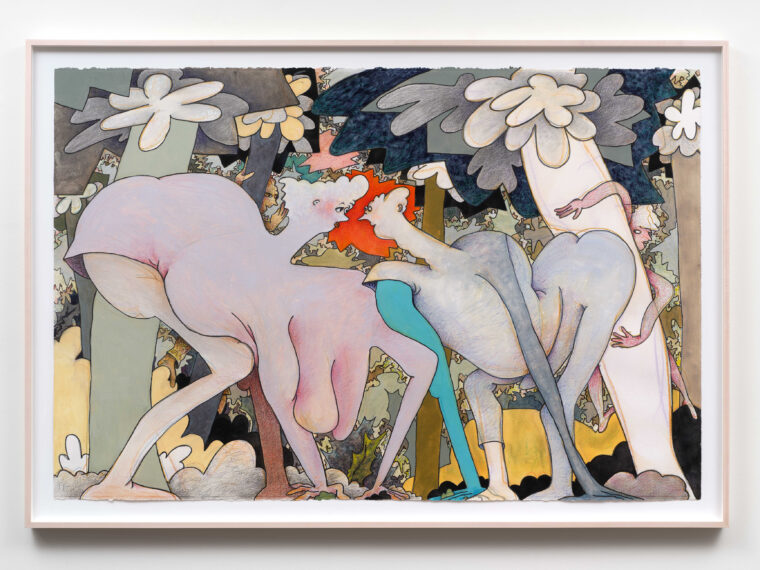
Gladys Nilsson, Spark, 2023. Watercolor, gouache, graphite, colored pencil, ink and crayon on paper, 40 ¼ × 60 ¼ in.
Exhibition Support

Gladys Nilsson: Gleefully Askew, 1963 – 2026
Crocker Art Museum
Sacramento, CA

Fred Eversley
Untitled (parabolic lens), (1969) 2020. 3-color, 3-layer cast polyester 19 1/2 x19 1/2 x 5 3/4inches.
Courtesy of the artist and David Kordansky Gallery Photo by Jeff McLane.
Exhibition Support

Fred Eversley: Reflecting Back (the World)
Orange County Museum of Art
Santa Ana, CA

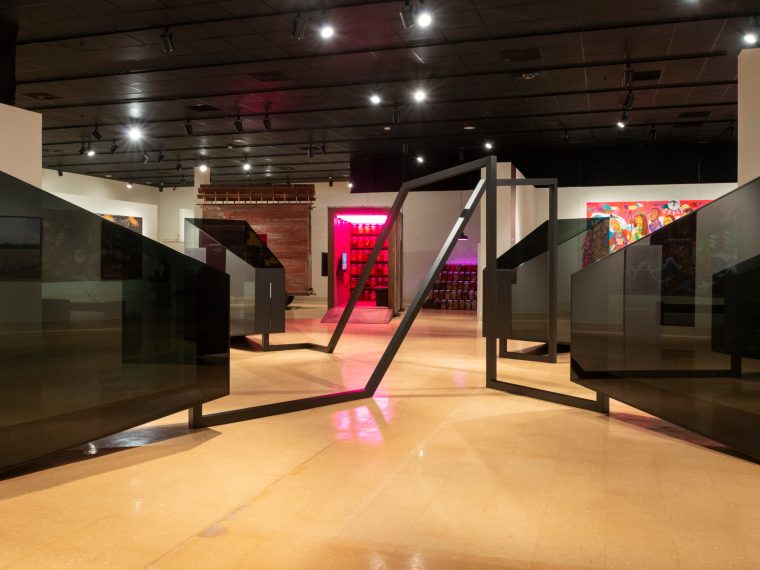
Torkwase Dyson, Way Over There Inside Me (A Festival of Inches), 2022. Painted steel, glass, painted aluminum, dry-erase marker. 2 Connectors each 203 x 33 x 93 in. 4 Trapezoids each 83 x 40 x 78 in. 2 units each compromised of 1 Connector and 2 Trapezoids 70 x 364 x 93 in. Courtesy the artist and Pace Gallery. Photography by Mitro Hood. Courtesy of the Mississippi Museum of Art and Baltimore Museum of Art.
Exhibition Support

A Movement In Every Direction: Legacies of the Great Migration
Mississippi Museum of Art
Jackson, MS

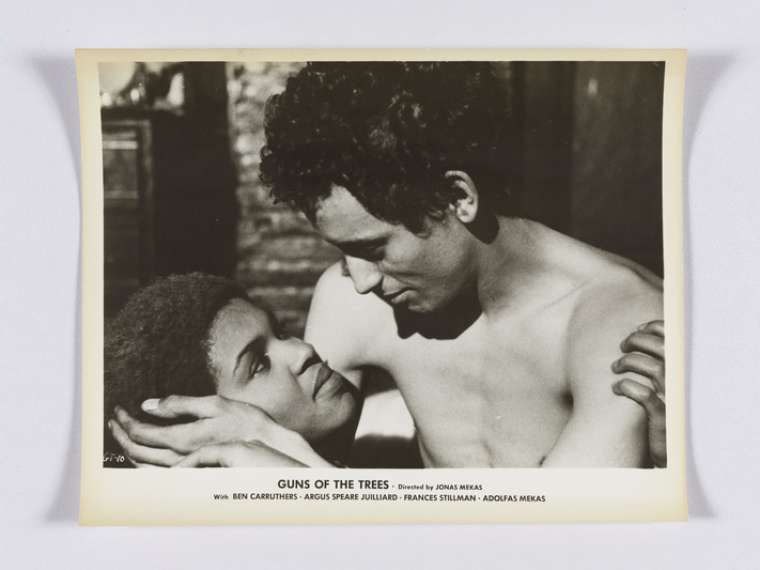
Production still from Guns of the Trees, 1962, 35mm
Exhibition Support

Jonas Mekas: The Camera Was Always Running
The Jewish Museum
New York, NY

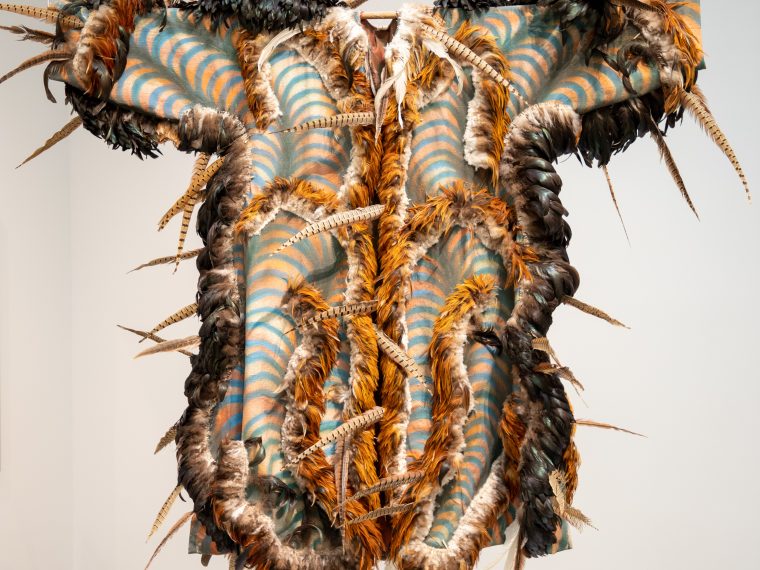
Carlos Villa, Third Coat, 1977. Feathers and acrylic on canvas; Inside lining: Bone dolls and
acrylic on taffeta, 82 x 80 in. Collection of di Rosa Center for Contemporary Art.
Exhibition Support

Carlos Villa: Worlds in Collision
San Francisco Art Institute
San Francisco, CA

Barbara Kruger
“Untitled (Truth),” 2013
Digital print on vinyl
70 × 115 in. (178.6 × 292.1 cm)
Collection of Margaret and Daniel S. Loeb
© Barbara Kruger, digital image courtesy of the artist
Exhibition Support

Barbara Kruger: Thinking of You. I Mean Me. I Mean You.
Art Institute of Chicago
Chicago, IL

2020

The Andy Warhol Foundation for the Visual Art doubles its Regional Re-granting Program from 16 to 32 cities and regions around the country.

The Andy Warhol Foundation for the Visual Arts
  • Facebook
  • Instagram
  • Twitter
  • Newsletter

Andy Warhol and Andy Warhol’s signature is a registered trademark of The Andy Warhol Foundation.
All Andy Warhol artwork © The Andy Warhol Foundation.
Website design by Wkshps

Use High-Contrast Text